
For Pastors
We will not take them without you.
In Short
- A Christian household from your congregation.
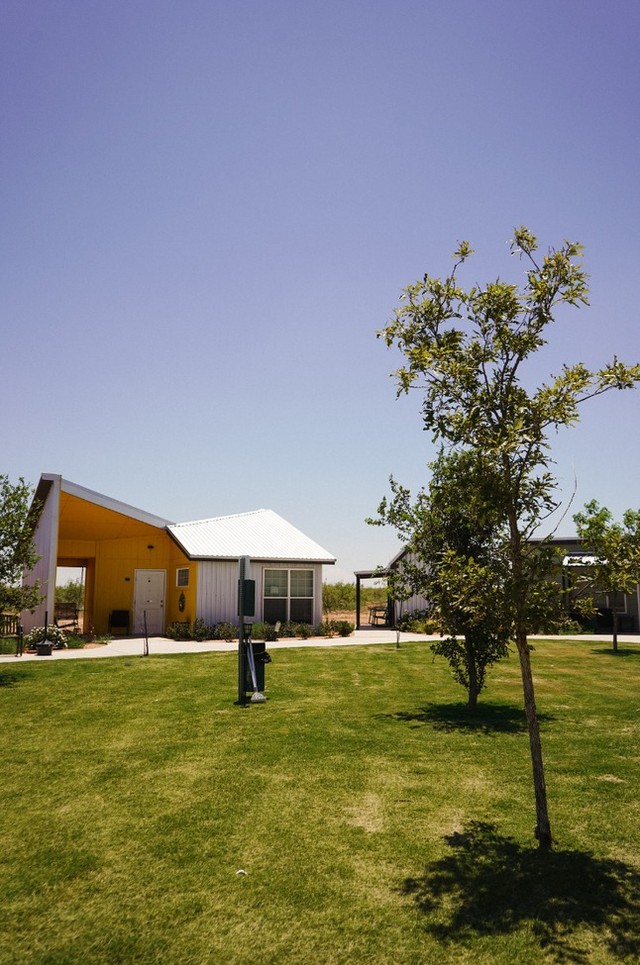
- The Field's Edge Village in Midland, Texas, a permanent community of tiny homes for neighbors coming out of chronic homelessness.
- Live next door as friends and disciple-makers. Share meals, give rides, pray, open the Scriptures, and stay through the hard days.
- At least two years on the Tentmaker track. The full-time track is its own call.
- An honest recommendation, a public commissioning, ongoing pastoral oversight, and one named contact.
- None on the Tentmaker track. On the full-time track, they raise support, and we ask you to pray about being a partner.
Why We Are Writing
And how are they to preach unless they are sent?Romans 10:15, ESV
A household in your congregation is considering moving into The Field's Edge Village to live among neighbors coming out of chronic homelessness, as a Christian presence and as disciple-makers. On our Tentmaker track, that is at least two years.
There is also a full-time track, where a missional raises support before coming and gives their time fully to the mission, the way a church sends someone to a foreign field. Many who consider it live far from Midland. If that is the household you shepherd, see If They Are Going Full-Time below.
We ask for your involvement because a household sent by a church stays accountable to a church. The Field's Edge is not a church, and we should not try to be one.
Homelessness is a poverty of relationships. Most of our neighbors lost family, friends, and church long before they lost a roof. A house is the start. What rebuilds a life is people who stay, and a household your church sends is how that happens in the ordinary hours.
What It Can Look Like
This is the life the household you shepherd would be stepping into.
Moving in
He arrives with what fits in two bags and a box. The house is small, clean, and his. The first few nights the quiet keeps him awake. The missional family next door waves from the porch, learns his name, and brings a plate over on the second night. Nobody asks for his story, and they keep showing up anyway.
Being known
At the Thursday cookout he takes the chair at the edge. A few weeks later it is a chair closer in. Somebody remembers how he takes his coffee. The missional dad asks him to help move a couch, then asks him to stay for dinner. He comes to Bible study for the food the first time and stays for the questions the second.
Healing
Then a hard month: a relapse, or a death back home, or a stay in the hospital. This is when the household next door matters most. They sit with him, pray with him, call Neighbor Care for the things that are beyond friendship, and they do not leave. Over time he hears the gospel from people who have seen him at his worst and still knock on his door, and he starts to believe he is not too far gone for Christ.
Thriving
A year or two in, he is the one carrying a plate to the new neighbor. He works Glean Up shifts and is proud of the paycheck. He calls his sister. He prays out loud at Bible study, short and plain, and some Thursdays he is the one who stays late to stack the chairs.
Not every story goes this way, and none goes in a straight line. This one is drawn from years of life in the Village, not from any one person.
What We Ask of You
An honest recommendation
Commissioning
Ongoing pastoral oversight
One named contact
If They Are Going Full-Time
Everything above still applies. A full-time missional is sent the way your church would send anyone to a foreign field, and a few things weigh more.
- Discernment from a distance. If they live far from Midland, they will not have months here for us to watch them. Your recommendation carries more of the weight. Tell us what you have seen of their life and ministry where they are.
- Support. They raise support before they come, from people who commit to pray and give. We ask you to prayerfully consider whether your church can be one of their partners, in prayer first and in giving as the Lord leads. What is expected of a sending church here, and the support amount, are things we will walk through with you in conversation.
- Care from far away. You remain their pastors after they move. Call, write, pray for them by name, and visit if you can.
Read the full-time track page for how the pathway and raising support work.
What We Are Not Asking
- Money, on the Tentmaker track. Those households keep their jobs and carry their own income. For them, this is not a funding request. The full-time track is different, and we say so above.
- To vouch beyond what you know. Just tell us what you know and what you do not.
- To send anyone. If your honest answer is that this household is not ready, saying so is a service to them and to us.
Two Things Before You Answer
A no from us is common. Sometimes it is timing or fit, and sometimes it is spiritual maturity. We say which. We discern carefully and slowly. When we decline, we tell the household first and you second. We will not leave you to explain it.
This is costly, and we say so out loud. Their privacy will look different, and it takes healthy boundaries. They are not on call around the clock, but living next door they will often be the first ones there when something goes wrong, and they will sit with people in relapse, in grief, and at the end of life. On the Tentmaker track, they pay a monthly program fee rather than receiving housing free, and we provide no salary. On the full-time track, they raise support before they come. We tell them this plainly and we tell you the same, because we would rather a household go in knowing the cost.
What We Look For
When you write, speak to these if you can. A sentence each is plenty.
- Dignified and honest in speech, in public and in private
- Sober-minded, not greedy for gain
- Holds the faith with a clear conscience
- Hospitable in practice, not in theory
- Manages their own household well. The state of the marriage as you know it, and how the children are being raised
- Faithful in all things, including when no one is watching
- Teachable. How do they take correction?
And the question that matters most: would you send your own family into a village of formerly homeless neighbors alongside this household, and be glad they were there?
Commissioning
Your church's practice governs. We ask only that it be public, before the congregation, and specific about where they are going and what they are being sent to do. On the Tentmaker track it comes after conversations with our leadership and before the agreement is signed. On the full-time track, we will work out the timing with you.
- Call them forward. Name them, name where they are going, and say why.
- Read Scripture. Matthew 28:18-20, Acts 13:1-3, Romans 10:14-15, 1 Peter 2:11-12, or 2 Corinthians 5:18-20.
- Ask them to affirm: that they believe God has called them; that they go as servants of Christ seeking the good of their neighbors and the glory of God; and that they will remain under the care of this church and tell you honestly how they are.
- Ask the congregation to affirm: that they will pray for this household and for the neighbors they are going to, and that they will go and see them while they are there.
- Lay hands and pray.
- Send them.
Two things worth saying out loud that day
- Name the cost, not just the adventure. Your people will pray better if they know what this family is giving up.
- Give the congregation something to do. A serve team at a Thursday cookout, a standing prayer slot, a visit.
Afterward, tell us the date. If you're close enough, we'd love to be there, and either way we'll be praying with you. Keep them in your missions rhythm, and come visit them when you can. It means more to them than you would guess.
Come and Look
If it would help to walk the Village before you answer anything, write me and come see it. If you are far away, we can start with a live video call where we show you around.